Give Merit & Ascendably · Case Study
What Happens When a Nonprofit Stops Buying Software and Starts Buying Success
The beginning
Something felt unaligned
Kuhu Saha had already been in one meeting. A Salesforce implementation firm had presented their proposal — polished, confident, technically thorough. The price was substantial. The pitch made sense on paper. She said no.
They talked about the software. Very little about Give Merit — what it actually does, who its people are, what they have been through. Kuhu left feeling like she had been offered a very expensive tool and told: good luck figuring out how to use it.
"I don't want to build a Ferrari that nobody can drive."
— Kuhu Saha, Executive Director, Give MeritGive Merit had been through this before. Two previous databases. Two attempts that didn't stick. Years of accumulated guilt about technology her team never fully trusted. She was not going to let that happen again.
The diagnosis
The problem was never the software
Most CRM implementations fail. Leaders know this. Implementation partners know this. The reason given is almost always the same: the previous system wasn't the right fit. And so the cycle continues.
"Technology offers the mythology of a different outcome with low personal investment."
— Tim Lockie, The Human StackThe framework
A different diagnosis
The Human Stack diagnostic measures organizations across two axes — the Tech Stack and the Human Stack — to find the gap between where culture is and where technology is.
The gap moved +13 pt — from tech-led (−8) across parity to human-led (+5), hitting the Year 1 goal. The people are now ahead of the systems, using the data in meaningful ways. When leaders and frontline staff see the same questions very differently, that gap is itself a finding.
Reference: raw composite scores (0–100) behind the gap above. Lighter dot = Year 0, solid dot = Year 1.
The partnership
Why Ascendably was different
Matt Henry founded Ascendably after years as a nonprofit system administrator. He had watched implementation partners arrive, build something technically correct, and disappear — leaving organizations with a system nobody truly understood.
He called it the extractive model. Ascendably's answer is Managed Success.
"Kuhu paid for success, not software. We sell managed success, not managed services on top of software setup."
— Tim Lockie, The Human StackYear zero
The baseline
In the summer of 2024, before implementation began, Give Merit completed its baseline Human Stack diagnostic. All staff participated. The results were honest.
The work
What managed success actually looks like
Every week, Matt met with Rachel Mazzaro and the operational team. Every month, a Center of Success meeting pulled together leaders and frontline staff to work through what needed executive attention.
"We missed two goals in fourteen months. Not two months. Two goals."
— Matt Henry, AscendablyKuhu's time investment across all of this: 18 hours in a year. One 90-minute monthly meeting.
The person at the center
Meet Rachel
Rachel had never worked in a database before this project began. She had, however, built sophisticated spreadsheet systems that tracked Give Merit's programs, participants, and outcomes with a rigor most organizations never achieve. Nobody had formally named what she was doing. She was, in Tim's words, invisible.
When Salesforce implementation began, Rachel became the internal guide for the whole organization. At go-live, she was terrified. One year later, her name appeared twelve times in anonymized staff comments.
"In teams where there's a culture deficit, people blame the system. In teams where there's a culture surplus, people name the person."
— Tim Lockie, The Human StackTim is candid that this is anecdotal — across the organizations he's worked with, there isn't yet a large enough sample to call it a verified pattern. But it bears out in the data at Give Merit specifically: the system was blamed in Year Zero, and by Year One, the credit had a name.
"In Year Zero, staff comments blamed systems that weren't working. In Year One, they named Rachel."
— Tim Lockie, The Human Stack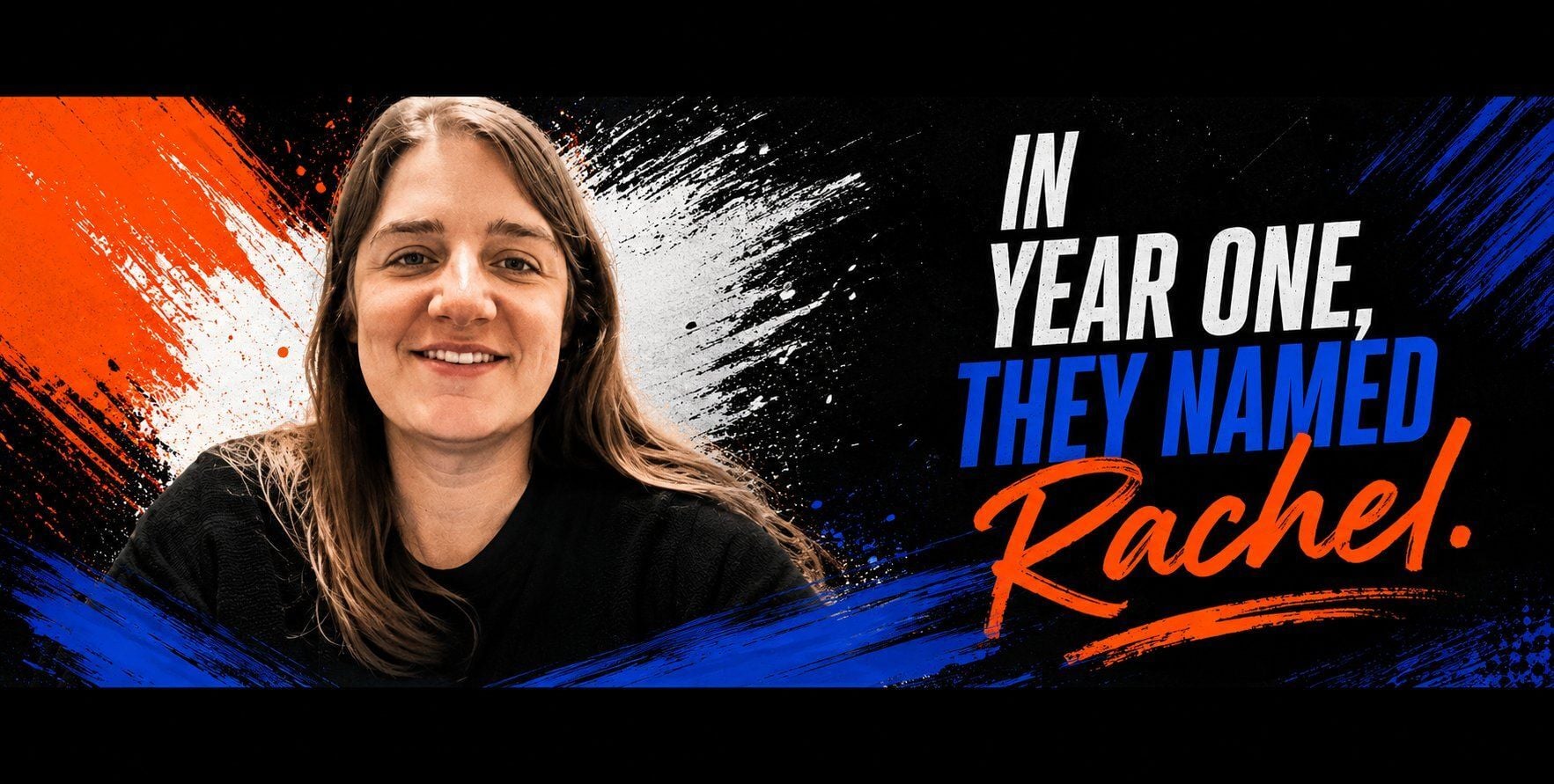
Year one
One year later
One year after baseline, Give Merit completed its second Human Stack diagnostic. The numbers moved.
The accountability score among non-leadership staff — that baseline 37 — rose to 79. A 42-point swing. This is the most important number in the transformation. It means the people who had been working around a system they didn't trust were now, overwhelmingly, choosing to work within one they did.
Reflection
What changed for Kuhu
Kuhu no longer carries the data alone. She can open Salesforce and see, in real time, how many scholarships have been awarded this month, whether program goals are being met, a parent conversation from months ago. She is no longer the single point of institutional memory.
More than that: she creates support requests herself now. That is a significant behavioral shift for a leader who once carried tech trauma and guilt. She is using the system not because someone told her to, but because it works for her.
The lesson
The bigger lesson
Give Merit is not an outlier. Every nonprofit leader who has watched a CRM implementation fail recognizes the story. The technology wasn't wrong. The support structure was.
Most implementation partners explicitly disclaim responsibility for adoption. The contract covers the build. Everything after — the culture change, the moment your staff stops working around the system and starts working with it — that is classified as your problem.
"Success with a side of software works. Software with a side of success never does."
— Tim Lockie, The Human StackWhat Give Merit built over fourteen months is not a database. It is a culture of accountability, a practice of continuous improvement, and a first chair who now handles around sixty support cases a month and is planning the next phase of the organization's growth. They built a system that their people trust. That is rarer than it should be. And it is replicable.